Saturday, May 15, 2010

Letters to Juliet

Brandt survived the semester!  He’s now just one year (2 classes and the dissertation) away from being DOCTOR Brandt

So to celebrate, he took me out to see a chick-flick last night.  The reason we saw a chick-flick was because our local movie theater chain only shows one movie per week in Rear Window Captioning, usually the biggest opening movie, and this weekend it was Letters to Juliet.  I told him we didn’t have to see it, because I knew it would be really sappy and he’d probably fall asleep halfway through, but he insisted.

The large group of teenage girls in front of us couldn’t figure out what our RWC viewer panels were, and asked each other, “Do we need to get those?  What are they for??”  Finally the leader of the group asked me, and I told her it was for the captioning that was projected from the back of the theater.  I pointed to the big LED screen in the back.  They all looked at it, tried to read the backwards letters, and were still confused.  One of the girls whispered, “I think it’s for Deaf people…”  They all nodded, then looked back at me, puzzled.  I know they were thinking something like, ‘But they’re talking, how are they Deaf?’  I didn’t elaborate and they didn’t ask anything else; it was more fun to keep them confused (I was a teenager once, too—sometimes they need to be reminded that they don’t know everything!)

The theme song to Letters to Juliet, “Love Story” by Taylor Swift, was the first song I ever saw translated into ASL on YouTube (see below).  The signer is Ally, a Deaf Education student.  She says:
“I strongly believe that music should be widely accessible to the Deaf and Hard of Hearing, just as it is to Hearing.  For this to be possible, it is essential that the music and lyrics are both signed using accurate ASL structure and features.”
This was about a year and a half ago, when I had first become interested in learning Sign.  Watching the video was extremely overwhelming, because the signs were flying by so fast and I didn’t know any of them.  I knew I’d never be able to sign like Ally, but I worried that I’d never even be able to understand what she was signing.  Happily, I can now watch this video and know most of the signs.  Keep in mind when you watch Ally’s videos, she is interpreting in ASL—it is not word-for-word English, it is a different grammar and syntax, and often the words/signs themselves are different.  (Unfortunately she does not provide captioning to show what the song’s lyrics are versus what she is signing, but on some of her videos she provides an explanation of how to sign the song, such as “Just to See You Smile”.)


Ally has a lot of videos, and I recommend them as a great way to see ASL in action.  If you would like to see ASL songs with the lyrics and actual signs (the “gloss”) captioned, check out “CaptainValor” on YouTube.  His video for Miley Cyrus’ “Party in the USA” is very well done (although the song will probably be stuck in your head for the next week!) and provides both the lyrics and the gloss (the signs he is performing) underneath in ALL CAPS.  My favorite video of his is “I Gotta Feeling” by the Black Eyed Peas (another one that will get stuck in your head).  This one doesn’t have captioning, but if you expand the description under the video, he has the lyrics and gloss written out.
  

Thursday, May 13, 2010

Frost/Nixon/Chorost

Last weekend, I got to see the play Frost/Nixon with my mom because someone in her season-ticket group had to cancel.  This was the second time I’d seen it; the first time was a very momentous occasion.

Brandt has a national conference that his school sends him to every year, and I always get to tag along.  Last year we were in Las Vegas, and two years ago we were in Washington, D.C.  A few months before the D.C. trip, we were complaining to Aunt Louise about the complete lack of anything captioned in our nearby Big City (we just got captioned movies last summer).  I asked her if there was such a thing as captioned theatre, and she said it unfortunately did not exist.  On a whim, I Googled “live theatre captioning,” and to my delight, I discovered the nonprofit group Caption Coalition, which captions live theatre [their website www.c2net.org is currently down]. 

Louise was thrilled to find out that captioned theatre exists; however, the closest showing to either of us was a good 800 miles away.  It’s all over the Northeast, West coast, and Florida, but nowhere in the middle of the country.  However, Brandt and I were going to D.C. soon, and the Kennedy Center for the Performing Arts  had a captioned performance during our trip.  We had never heard of Frost/Nixon, and figured it would be really boring.  But we wanted to experience captioned theatre, so agreed to give it a try.  I ordered seats down in front of the 4-feet-wide LED screen, and got a $100 discount on the tickets because it was in the ‘special needs’ section!


When we found our seats, we wondered if anyone else was there just for the captioning.  I immediately saw a college-aged girl speaking in Sign Language to a friend (D.C. is the home of Gallaudet University, the only liberal arts university for the Deaf in the world) and whispered, “there’s our answer!”  Then a man sat down in front of us; he had dark brown cochlear implants on both sides of his head, matching his dark brown hair.  I eavesdropped as his friend introduced him to a woman who worked at the theatre.  “This is Dr. Michael Chorost” (I paid close attention as she fingerspelled C-H-O-R-O-S-T), “he wrote a book about getting Cochlear Implants.”  My ears perked up.

In addition to my excitement over Dr. Chorost, the play turned out to be excellent.  As we walked out of the theatre, Brandt couldn’t stop talking about how great the play itself was, compounded by the captioning.  “I understood every word!  It was wonderful!”  I agreed 100%.

I never got up the nerve to talk to him, but as soon as we got back to our hotel, I looked up his book, Rebuilt: How Becoming Part Computer Made Me More Human (the subtitle of the paperback edition is My Journey Back to the Hearing World).  I ordered it the second we got home from D.C. 

It took me a long time to get Brandt to read Dr. Chorost’s book, even though they have a lot in common, down to their TI-83 calculators from high school and current iPhones, Dell laptops, and general techno-geekiness.  There were several reasons for his resistance.  First, he didn’t think his hearing was near as bad as it was (this was 18 months before his first appointment with Dr. Awesome).  Second, he was holding out for stem cell/gene therapy.  Third, and most importantly, if you haven’t had Cochlear Implant surgery explained by a good surgeon, the idea of it is terrifying.  So it wasn’t until after the HLAA convention that I could convince him to read it.  He said he liked it, although he “already knew most of the information on Cochlear Implants.”  I rolled my eyes and reminded him that he didn't know anything about them before the convention!
  

Wednesday, May 12, 2010

Philadelphia Bound!

My Grandma Jean is awesome.

I had been wanting to attend the National Association of the Deaf’s biennial conference in Philadelphia this July, but it was going to be way too expensive.  Since they only meet every 2 years, the conference lasts 6 days—which makes sense economically, instead of having a 3- or 4-day conference every year and paying for an additional flight.  But, 5 nights in a downtown convention hotel, a $500 flight, transportation, and the conference registration adds up to way too much for an unemployed writer to afford.

So, my Grandma Jean told me on Sunday, when we were back home for Mother’s Day, that it was really important for me to attend the conference and she was going to help me out.  Wow!


Aside from the cost, I still have some concerns (ok, fears) about this trip.  First is the language.  Keep in mind that the NAD is the reason American Sign Language did not go extinct after Oral-only education was mandated for deaf students in 1880.  So everything is going to be conducted in ASL: the workshops, the Miss Deaf America finals, the College Bowl Tournament, etc.  They also provide CART live captioning, but I’m afraid of getting overwhelmed by the super-fast, nonstop signing.  I’m also worried about trying to communicate with the other attendees.  I have a feeling I’ll be saying “SORRY I SLOW I LEARNING ASL” and “I CAN’T READ FINGERSPELLING!” quite a lot.  That, and just staring blankly with very wide, lost eyes.

Second, this is the first time I will ever be flying by myself (Brandt can’t go because he has to teach summer school).  I’ve always flown with either family, classmates, co-workers, or Brandt.  I know that’s pathetic, but I have a very poor sense of direction and I hate airports!  Luckily my flight is nonstop, and I’m going to carry-on my luggage so I don’t have to worry about finding the luggage claim.  Just the thought of finding the taxi line is making me really nervous, though.

My third concern is acceptance.  We have been graciously welcomed into our local Deaf Community's events, but we are still outsiders to their culture.  Deaf people are generally very patient with ASL students, but after a few minutes, it gets hard to simplify and slow down your speech enough to make it accessible to someone who is just learning your language.  Have you ever tried to talk with someone who is new to speaking English?  It's hard to maintain without getting frustrated and bored.  So even though I'm an ASL student, a Nearly Earless spouse, and an Anthropologist who loves exploring new cultures, I am and will always be an outsider to the Deaf culture.

To prepare for the conference, in addition to studying up on ASL, I need to read a few more books on Deaf culture from the big stack sitting on my desk (which is actually the coffee table).  At the top of the stack are A Place of Their Own: Creating the Deaf Community in America, Everyone Here Spoke Sign Language: Hereditary Deafness on Martha’s Vineyard, and A Journey into the DEAF-WORLD.  That last one is 500 pages long, so I have a lot of preparation to do!
  

Sunday, May 9, 2010

Star Trek-iversary

Happy Mother's Day!  A year ago today, Brandt saw a captioned movie in a theater for the first time.  He isn’t a big movie buff, but he does like Star Trek (yes, we’re geeks!) and I knew he wanted to see the latest movie in the theater.  However, with his hearing loss and no-longer-powerful-enough hearing aids (it was still a few months before he got the new Exelias), he knew he’d never be able to understand the dialogue unless he saw the movie with captioning.

Our nearby Big City didn’t have Open Captioning or Rear Window Captioning at the time, so we had several options—none of which were exactly convenient.  Brandt’s suggestion was simply to wait until the movie came out on DVD, and he would watch it with subtitles.  I immediately rejected this idea, because he was trying to avoid learning anything about the movie before he saw it and that would be practically impossible after waiting several months to see it.  I also didn’t like the idea that he would have to miss out on the big-screen experience because of his hearing impairment. 

The second choice was to drive two hours to our hometown and see it in Open Captioning, which would be offered several weeks after the initial release date.  This was problematic because OC movies are only offered at specific dates and times, and the company couldn’t tell me in advance what those dates and times would be.  Sometimes they only offer a movie in OC during the middle of the week, which would be impossible for us to attend.

Our third choice was to drive four hours in the opposite direction, to the nearest theater offering Rear Window Captioning.  I had been to several OC movies with Josie, but had not been to a RWC movie before.  I asked Louise what she knew about RWC, and she didn’t know much about it either.  The upside of RWC is that it is available during any showtime, because you have a Reflector Panel that you install in the cupholder to capture the text that is displayed on an LCD screen in the back of the theater.  I chose RWC for our dilemma; I bought the tickets online and surprised Brandt by saying “Go get ready fast, we have a looong drive ahead of us!”

I asked the ticket seller where to get our “captioning-viewer-thingies” and was pointed to the manager’s desk.  He fished out two Reflector Panels from a cardboard box and handed them to us.  They were heavy and cumbersome, and I felt very self-conscious as we carried them into the auditorium.  It took longer than I had anticipated to drive there, so there were already about 75 people in their seats.  I had read online that it’s best to sit in the middle of the theater when using RWC, but all those seats were already taken.  Brandt said, “Let’s just find a seat in the back.” 

We tried sitting on the second-to-last row, but couldn’t get the RWC text anywhere in our Reflector Panels from there.  So we moved one row down and sat off to the right-hand side; it worked, sort of.  After a good five minutes of turning and twisting the arms of the panels, we each finally got it in a spot where 1) it would stay put without slowly drooping, and 2) the text, “Welcome to Rear Window Captioning/Please adjust your reflector” was visible—albeit, my text was way over in the upper-left corner of the panel, and Brandt’s was down at the bottom of his panel, several inches away from the screen.  It was far from perfect, but, it was something! 

The first preview didn’t have captioning, which made me nervous.  The Open Captioned movies I’d seen with Josie never had their previews captioned either, but I was still a little worried.  The second preview, for “Up,” was captioned, and I was so excited I hit Brandt on the shoulder.  When the movie itself started, I was bouncing up and down in my seat.  I looked at Brandt at least 20 times throughout the movie, making sure he could still see his captioning and was enjoying the plot.  “Watch the movie, not me!” he whispered.  It was an absolute success; he had a few issues with the alternate plotline, but loved being able to see the movie in the theater, on opening weekend, AND able to understand every word.  I was beaming the whole four-hour car ride back home. 

We didn’t have nearly as a great an experience when we attempted to see the movie again, this time in Open Captioning, with our friends Cassie and Basil.  But that’s a story for another post.

And for you fellow Trekkies, here is a picture of Brandt’s surprise Star Trek groom’s cake, baked and decorated by our very own Josie!


Friday, May 7, 2010

ASL Level 3

Last Friday, there were only 3 people signed up for my Level 3 ASL class.  We need 12 for the class to make, so it wasn’t looking possible.  But Monday afternoon, they got enough people at the last minute.  Hurray!

So Monday night, I had to teach Brandt the last two lessons from Level 2, which I had finished back in early March.  We kept putting it off, since he was so busy with his doctorate classes and didn’t have time to learn anything else.  It was about 100 words, but we got through them pretty quickly.  Then I went through the entire Signing Naturally Level 1 book, which we used for both our Level 1 and Level 2 classes.  Luckily I could remember almost all of the signs.

When I got to class, I discovered that we only had 8 students.  I think this is better; when we have too many in the class, it’s hard for everyone to get the assistance they need with learning the signs.  The second surprise was that our teacher, Mary, is Hearing.  She doesn’t have any family that is Deaf; she learned ASL after graduating college.  I think it’s strange that we had a Deaf teacher for Levels 1 and 2, and a Hearing teacher for Levels 3 and 4; reversing that probably would have been easier.  Since my previous teacher, Susanne, was Deaf, it was much harder to understand her.  I didn’t know enough signs to talk to her extensively and ask all the questions I had, and because she spoke primarily in Sign, I didn’t always know what she was saying.

I had a few freak-outs when Mary told me that several of the signs Susanne had taught me were wrong.  Now, a lot of words have several different signs—there are regional differences, and some are even personal preferences.  But this wasn’t the case; the signs I used were just wrong.  Then she announced that we would all have to take Level 3 again, at least once, because it was too hard and we couldn’t advance straight to Level 4.  I’ve always been a straight-‘A’ nerd, so being told that essentially I’m going to fail a class didn’t sit well with me.  Granted, it’s not really “failing,” but in my mind, it’s just as bad.

I calmed down after the first hour of class.  Mary told us some stories in Sign (no voice), to see if we could understand her.  The first story was about her new $25 refrigerator bought from a friend, which she had to put in her garage because her kitchen is too small.  I understood what she said!  I started feeling better about the class.  Then she told us about the house she grew up in, which was a ’70s all-glass house that was not conducive to high school parties because the neighbors (and cops) could see inside.  I got it again!  Maybe this won’t be so bad afterall…

I was on the phone with my mom when I got home from class; Brandt was taking our dinner, homemade pizzas, out of the oven.  He asked me just in Sign if I wanted milk.  I signed back, “NO, WATER.”  He nodded and walked away to get it, then paused and looked back at me with a big excited grin.  We communicated in Sign!  I grinned back and signed GOOD!  He beamed.

Wednesday, May 5, 2010

AZ Rules for Captioning

My opinion of Arizona has increased exponentially this week.  The Ninth Circuit Court of Appeals has overturned a 2008 ruling by the lower court, which now requires that movie theaters provide captioning for D/deaf/hard-of-hearing patrons and descriptive audio for blind patrons, under the auspices of the Americans with Disabilities Act.  This is the FIRST TIME a court has ruled in favor of captioning; there have been several cases where the movie theaters settled and agreed to provide captioning on a small percentage of their screens, but never before has a judge ruled in the plaintiffs’ favor.

The judge in the 2008 ruling, Arizona v. Harkins, said that because “theaters offer motion pictures to the public in a specific format which combines audio and visual elements,” providing captions and audio descriptions would require a movie theater to “alter the form in which it normally provides services,” meaning that closed captions would “change audio elements into a visual format” and descriptions would “change visual elements into an audio format.”

So why have judges always ruled against captioning in the past?  And why hasn’t it been required by the ADA?  Longtime captioning advocate Nancy Ellis explains it best
“Movie theatre complexes are different because while the building is subject to ADA accommodation laws, what’s on the screen (or in the case of live theatre – what’s on the stage), is protected under the first amendment.  It is proprietary content. In the eyes of a motion picture studio, asking them to put captions on their films is equal to placing dots on the famous painting “The Mona Lisa” in order to make it accessible to someone who is Blind.  An exaggerated analogy, but essentially, the argument has been you can’t alter someone else’s work of art without their express permission.  In the case of live theatre, the artistic director generally decides if and where captions will go.”
But as Brandt pointed out, “There’s only one Mona Lisa.  There are thousands of copies of a movie.”  I added to that, “Of course you can’t alter the actual Mona Lisa, but why couldn’t you have a replica that is accessible to blind people?” 

I find it ridiculous to say that making something accessible just by adding captions or audio descriptions is too ‘fundamentally altering of a movie’s artistic merit.’  Would many people have gone to see Crouching Tiger, Hidden Dragon if it didn’t have English subtitles?  I highly doubt it!  Let’s be honest here:  this is all about money.  Movie theaters don’t want to pay the extra money for the captioning and descriptive technology, and they aren’t going to provide it out of the goodness of their hearts (or pocketbooks).  They’re only going to comply when they’re forced to—and they’re willing to spend money on legal battles against it, rather than just pay up front to give us captioning.

The judge in this week’s case, Alex Kozinski, had some great statements against the movie theater chain in question, Harkins.  He couldn’t understand why they would want to be “forced to do something” that they “should willingly and cheerfully and happily do.” 

Judge Kozinski pointed out that “theaters cost huge amounts of money.  A movie theater is no longer a barn with a sheet at one end and a bunch of chairs…you have all sorts of sophisticated technology, 3D viewing and so on… This seems like a drop in the bucket.” 

And, my personal favorite,
“You are going to lose eventually.  I don’t know if you are going to lose this case or not, but you are going to lose this battle in the end.  You can get out in front of it and be the good guys, or you can be dragged kicking and screaming and look like jerks.  I don’t understand why you are choosing to fight this battle.”
He called them JERKS!  I love this judge!

I have the perfect solution to this debate.  Take the movie theater owners, their lawyers, and unsympathetic judges to a movie—not a big-budget action flick; one with a lot of dialogue, like Before Sunset.  Have them wear foam earplugs, the kind used by construction workers, and give them headphones that play loud, constant static.  Then halfway through, turn the sound completely off.  Ask them how much they enjoyed the movie. 
Or, play a German movie without English subtitles, and make sure to turn the volume way down.  See how much they got out of it.  They could still see the movie, afterall, and probably figured out some words here and there.  That’s just as good as being able to fully hear and understand a movie in English, right?  Right

Didn’t think so.
  

Tuesday, May 4, 2010

Poor Opryland

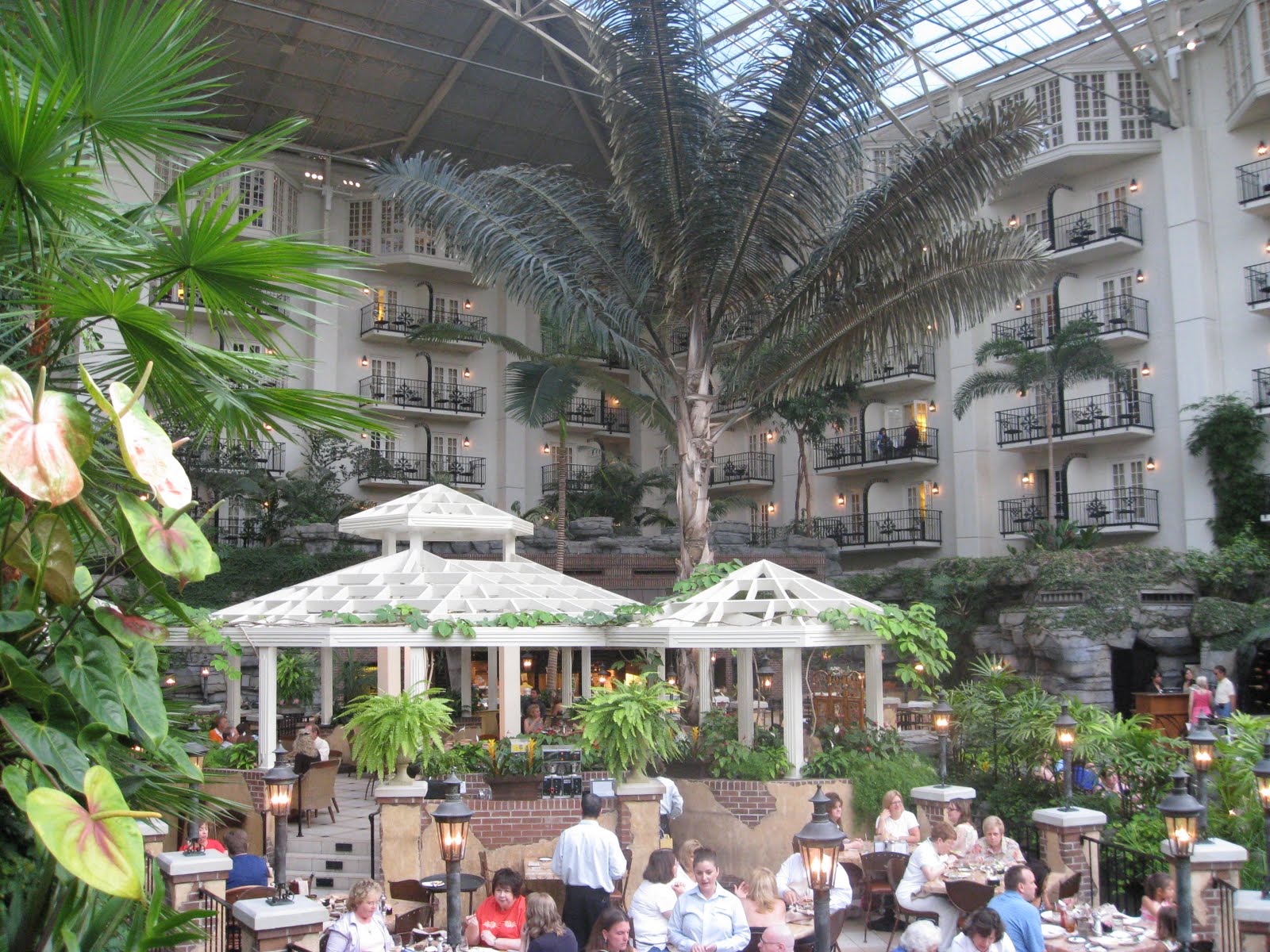
The weekend flooding in Tennessee, especially Nashville, has wreaked major havoc on the Gaylord Opryland Hotel where we attended the Hearing Loss Association of America convention last June.  The bottom floor of the hotel is currently under 6 to 10 feet of water inside, and they might have to close for up to six months for renovations. 

This makes me sad because I have such wonderful memories of the Opryland Hotel and the HLAA convention.  It was where Brandt first discovered just how amazing Cochlear Implants are and decided that not only were they “not so scary afterall,” but that he really wanted one, ASAP!

The Opryland is the largest non-casino hotel in the world.  It is made up of several huge atriums; with its all-glass ceiling, indoor river, and thousands of plants and trees, it really does feel like you’re outside.  Because it has gone through so many expansions, the layout of the enormous hotel is very confusing.  If Brandt hadn’t been with me to navigate, I never would have found the convention from our room—it was half a mile away!  You really have to see it in person to fully appreciate just how ginormous the place is; pictures can't do it justice.  But, I’ll try.

Here is my picture of the Cascades restaurant, where Brandt and I had a very nice lunch (click pictures for higher resolution):

…and what it looks like now, underwater: 

The view from the restaurant, which is completely underwater today:

Gazebo in the Garden Conservatory—popular spot for weddings:

Entrance to the Delta Atrium, by far the largest of the four:

Boatride on the indoor Delta River.  We had so much fun taking the boat tour!


Update:  How about some before-and-after video for a better effect?  The before video is rather long (but like I said, this place is huge!); the interior shots start at 0:40.  The after video shows the 10 feet of water in the Cascades atrium—wild!